What is the best wood to burn?
The best firewood is simply dry firewood. Here is how to spot logs under 20% moisture, what the Ready to Burn label means, how to season…
Northumberland & Tyne and Wear
Flexible stainless steel chimney liners fitted for wood-burning and multi-fuel stoves. We assess your chimney's condition and size, recommend the correct liner grade and diameter, install it with the right fittings and test the flue so your stove can run safely.
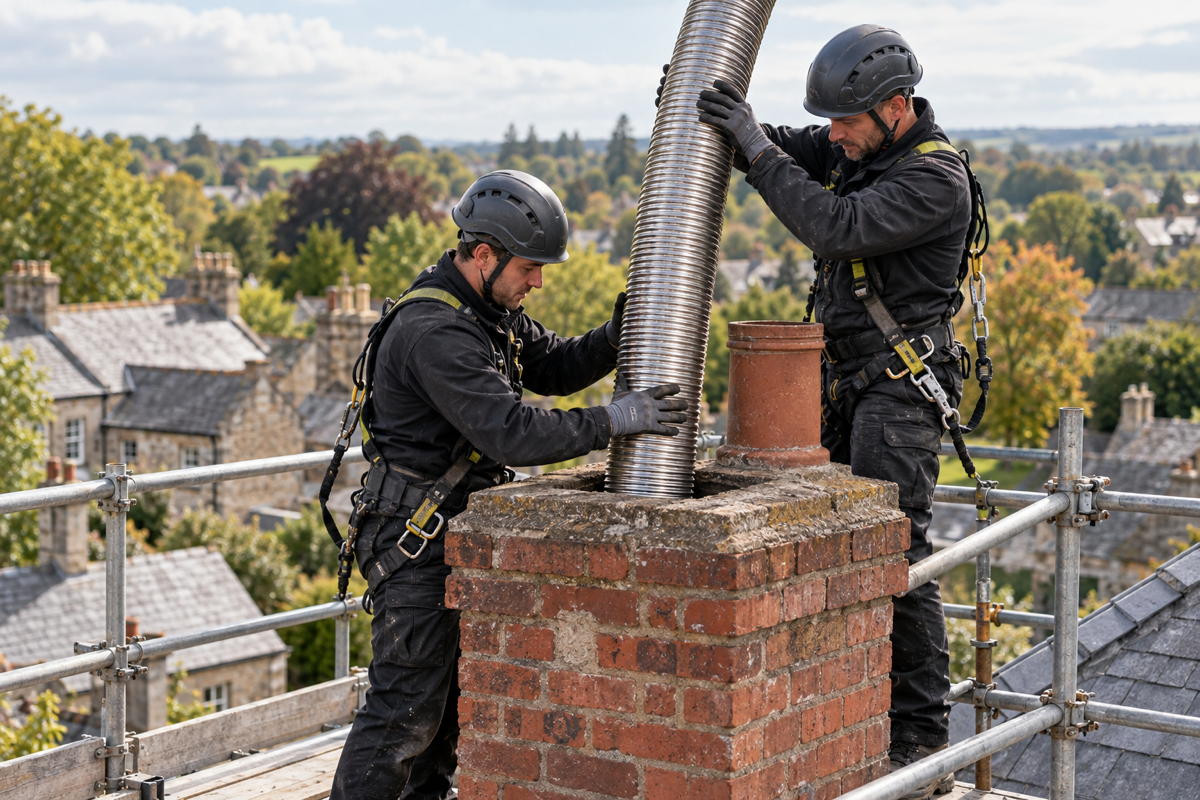
Many homes in Northumberland and Tyne and Wear have chimneys that were built for open coal fires decades ago. They can often serve a modern stove well, but not always as they are. A chimney liner creates a smooth, sealed flue of the right size inside the existing chimney, helping the stove draw properly and keeping smoke and gases where they should be. This page explains when a liner is needed, what the work involves and what affects the cost.
A stove produces a smaller volume of cooler flue gases than an open fire. In a large, cold, unlined chimney, those gases can cool quickly, leading to poor draw and condensation. That condensation mixes with soot to form tar, which can stain chimney breasts and build up inside the flue. A liner of the correct diameter keeps gases warmer and moving, and a sealed liner also protects against leaks through cracked mortar joints.
Common reasons for lining include:
A liner is not always required. If a chimney is in good condition, sound and suitably sized, a stove may be connected directly. We assess this rather than assuming either way.
We look at the chimney from inside and out, including the stack, pot and the fireplace opening. A sweep before the work is often needed. A smoke test shows whether the chimney leaks and how well it draws. We measure the flue to confirm a liner will pass through any bends or offsets.
Flexible stainless steel liners are the most common choice for stove installations. They come in different grades. A standard grade is generally suitable for wood, while a higher grade is usually recommended for multi-fuel stoves and smokeless fuel. The diameter must never be smaller than the stove's flue outlet. Approved Document J sets minimum flue sizes, and many stoves need a 150mm flue, while a smaller size is permitted for some appliances, including certain Defra-exempt stoves. We confirm the right size for your stove.
The liner is lowered from the top of the chimney, which usually means working safely at height with an access tower or scaffolding. At the top, it is secured with a clamp and top plate and finished with a suitable pot hanger or cowl. At the bottom, it connects to the stove through a register plate and an adaptor. Where appropriate, the space around the liner may be insulated, either with a wrap or with loose insulation, to help keep flue gases warm.
Once the stove is connected, we test the flue and check that it draws correctly. The details of the flue are recorded on a notice plate, and the installation is certified as part of the stove installation, through a competent person scheme such as HETAS or by Building Control.
Lining a chimney as part of a stove installation falls within Part J of the Building Regulations, and the flue must meet the guidance in Approved Document J. Relining a chimney is notifiable building work in its own right. On some buildings, changes at the chimney top, such as new pots or cowls, may need permission if the property is listed or in a conservation area. If you are unsure, check with your local planning authority. Our guide to stove regulations in England explains the background.
Liner installations vary a lot from house to house. The main factors are:
For typical, approximate figures, see our guide to what stove installation costs. Every home is different, so we always provide a written quote after an assessment.
If your home has no chimney, or the chimney cannot be used, a twin-wall insulated flue is usually the alternative. Our article on installing a wood burner without a chimney explains how that works.
A liner still needs sweeping, at least once a year for wood and more often with heavy use. Burning dry fuel reduces deposits and helps the liner last. Our article on how often a chimney should be swept has more detail. If you are planning a new wood burner, we can assess the chimney and quote for the liner as part of the same job.
Not always. It depends on the chimney's condition, size and the stove you choose. Many older or oversized chimneys benefit from a liner. We check with a survey and smoke test.
It depends on the liner grade, the fuel burned, how dry it is and how often the chimney is swept. Burning dry fuel and regular sweeping help a liner last longer.
A standard stainless steel grade is generally suitable for wood. A higher grade is usually recommended for multi-fuel stoves and smokeless fuel. We confirm this when quoting.
Often some form of safe access to the chimney stack is needed, such as scaffolding or an access tower. It depends on the height and position of the stack. This is set out in your quote.
We'll visit, check what's possible in your home and give you a clear written quotation with no obligation.
The best firewood is simply dry firewood. Here is how to spot logs under 20% moisture, what the Ready to Burn label means, how to season…
If you have a new or replacement stove fitted in England, Building Regulations say a carbon monoxide alarm should go in the same room. Here is…
Whether a wood-burning stove saves you money depends on what you pay for logs, what fuel it replaces and how you use it. This guide works…
Tell us about your property and we'll arrange a visit and a clear, written quotation.