What is the best wood to burn?
The best firewood is simply dry firewood. Here is how to spot logs under 20% moisture, what the Ready to Burn label means, how to season…
Northumberland & Tyne and Wear
Removal of an old, damaged or unsuitable stove and installation of a modern replacement. We check the existing liner or flue, hearth and ventilation, recommend a correctly sized Ecodesign stove, then fit, test and certify it as a new installation.
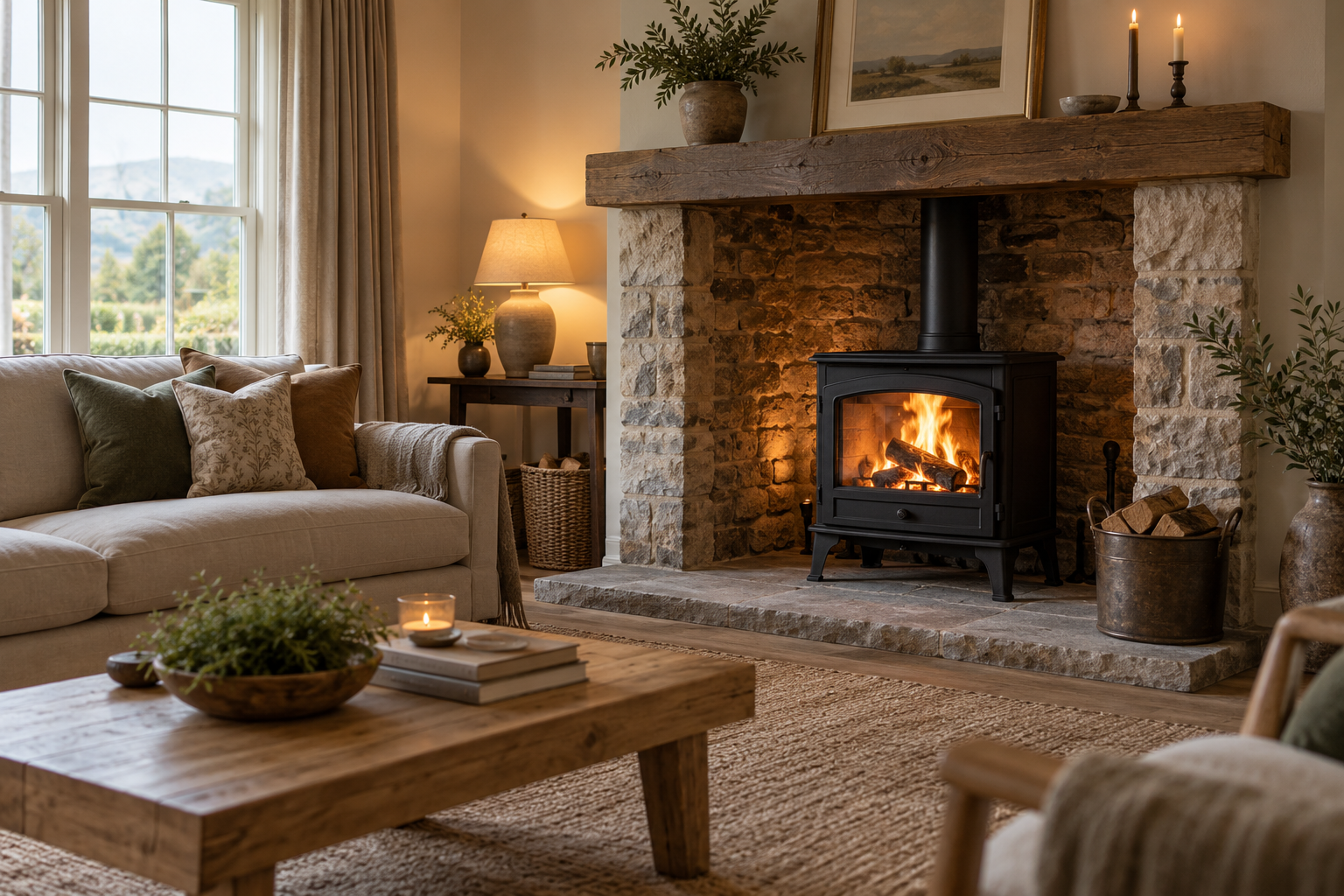
Stoves do not last forever. Cracked bodies, warped grates, failing door seals and a flue that has seen years of use can all mean it is time for a change. Others are simply too big for the room, or were never installed quite right. Replacing a stove is often more straightforward than a brand new installation, but it still needs the same care and is treated as new work under the Building Regulations.
If you ever suspect fumes are escaping, stop using the stove, ventilate the room and have it checked. A working carbon monoxide alarm is essential.
We look at the existing stove, the liner or flue, the hearth and the surround. An existing liner may be reusable if it is in good condition, the right size and grade for the new stove and passes testing. If it is damaged, too old or the wrong size, a new chimney liner may be needed. We also check that the hearth and clearances meet the requirements for the new stove, which may differ from the old one.
We recommend a stove that suits the room rather than matching the old one's output by default. Stoves sold new in Great Britain since 1 January 2022 must meet Ecodesign limits on efficiency and emissions, so a modern replacement should burn more cleanly than many older stoves. If you live in a smoke control area and want to burn wood, the new stove must be Defra-exempt. You may also want to decide whether to stay with a wood burner or move to a multi-fuel model, or the other way round.
We protect the room, disconnect and remove the old stove and take it away. If the outlet position on the new stove is different, connection pieces or the register plate may need changing. The new stove is then fitted, connected and tested, and we check the flue draws properly.
We show you how to use the new stove, which may light and control differently from your old one, and explain fuel and sweeping. A carbon monoxide alarm must be fitted in the room in England when a replacement fixed combustion appliance is installed, so we check you have one in the right place. The work is certified through a competent person scheme such as HETAS, or signed off by Building Control.
Replacing a stove is notifiable building work under Part J of the Building Regulations, just like a first-time installation. The new stove, flue and hearth must meet Approved Document J and the manufacturer's instructions. This is why we cannot simply swap one stove for another without checking the flue, hearth, clearances and ventilation. Ventilation requirements in particular can change with a different stove output. More detail is in our guide to stove regulations in England.
A replacement can be less involved than a new installation, but costs still depend on:
See our guide to typical installation costs for approximate ranges. Every home is different, so ask for a written quote based on a survey.
If you currently have an open fire or a gas fire rather than a stove, the job is more like a new installation. The chimney may need sweeping, testing and lining, and the fireplace or hearth may need work. A gas fire must be disconnected and the gas supply capped safely by a Gas Safe registered engineer. We can explain what is involved during the survey, and you can read about the process on our fireplace preparation page.
Sometimes. It needs to be in good condition, the right diameter and grade for the new stove, and pass testing. If not, we will recommend replacing it.
Yes. Replacing a stove is notifiable building work. It must be self-certified through a competent person scheme such as HETAS, or notified to Building Control.
In England a carbon monoxide alarm must be fitted in the room when a replacement fixed combustion appliance is installed. If you already have one, we check it is suitable and correctly placed.
Often, but not always. A different size or type of stove can have different hearth and clearance requirements. We check this before quoting.
We'll visit, check what's possible in your home and give you a clear written quotation with no obligation.
The best firewood is simply dry firewood. Here is how to spot logs under 20% moisture, what the Ready to Burn label means, how to season…
If you have a new or replacement stove fitted in England, Building Regulations say a carbon monoxide alarm should go in the same room. Here is…

Whether a wood-burning stove saves you money depends on what you pay for logs, what fuel it replaces and how you use it. This guide works…
Tell us about your property and we'll arrange a visit and a clear, written quotation.