What is the best wood to burn?
The best firewood is simply dry firewood. Here is how to spot logs under 20% moisture, what the Ready to Burn label means, how to season…
Northumberland & Tyne and Wear
Installation of multi-fuel stoves that can burn wood or approved smokeless fuel. We check your chimney and hearth, advise on liner grade and fuel choice, explain smoke control area rules, then fit, test and certify the stove to Building Regulations.
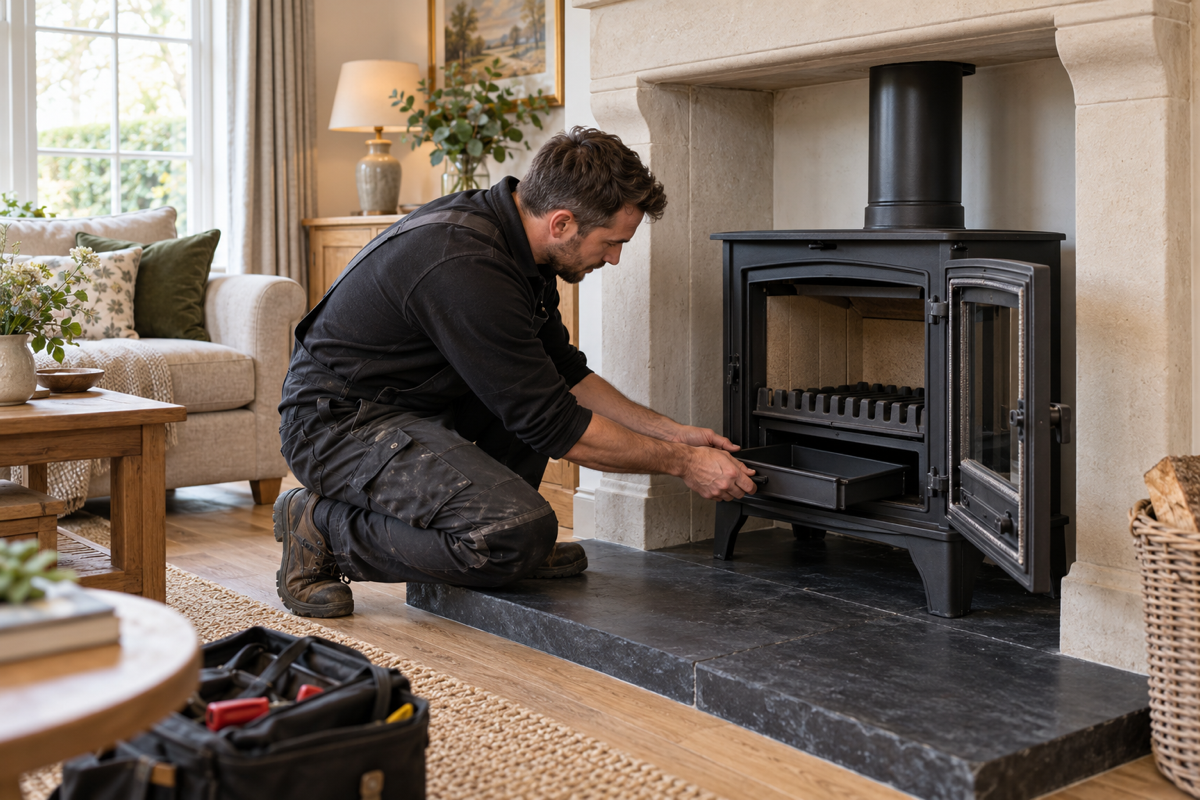
A multi-fuel stove gives you flexibility. On most models you can burn seasoned logs on one evening and approved smokeless fuel on another, which some households find useful for long, steady heat or when good logs are hard to come by. Installing one follows the same careful process as a wood burner, with a few extra points about fuel, liners and smoke control rules that are worth understanding before you decide.
Wood burns best on a bed of ash with air coming from above. Mineral fuels such as anthracite and manufactured smokeless fuel need air from below, so multi-fuel stoves usually have a riddling grate and an ash pan. That makes them a little more versatile, though some people find a dedicated wood burner simpler to run if they only ever burn logs. Our comparison of wood-burning and multi-fuel stoves sets out the pros and cons in more detail.
We look at the chimney or flue route, the fireplace and hearth, and the room size. We also ask how you expect to use the stove and which fuels you plan to burn, because this affects the choice of stove and the flue components.
We recommend an output that suits the room rather than the biggest model available. If you live in a smoke control area, we will point you towards Defra-exempt models if you want to burn wood, and explain which smokeless fuels are suitable. Since 1 January 2022, new stoves sold in Great Britain must meet Ecodesign efficiency and emission limits.
Smokeless and mineral fuels can produce acidic deposits in the flue. If a chimney needs lining, a higher-grade stainless steel liner is generally recommended for multi-fuel use. We explain the grades and when a liner is needed on our chimney liner installation page. If there is no chimney, a twin-wall flue rated for the fuels you intend to burn can be used instead.
The stove must stand on a suitable non-combustible hearth with safe distances to combustible materials. Once fitted, we test the flue, check the stove is drawing correctly, fit a carbon monoxide alarm where required and attach the notice plate. Before leaving, we show you how to light the stove, use the riddling grate and empty the ash pan safely.
The Air Quality (Domestic Solid Fuels Standards) (England) Regulations 2020 changed what can be sold for burning at home:
The manufacturer's instructions are the final word on what a particular stove can burn. Burning the wrong fuel can damage the stove, invalidate the warranty and harm the liner.
Smoke control areas are common in our region. The whole of Newcastle upon Tyne is a smoke control area, as are the former Wansbeck and Blyth Valley districts of Northumberland, which include Ashington, Blyth and Cramlington, and parts of other towns. In a smoke control area you can only burn authorised smokeless fuel, unless your stove is Defra-exempt, in which case you can burn the fuels its manufacturer specifies. Councils can issue penalties for excess smoke. Our guide to smoke control areas explains how to check your address.
As with any solid fuel stove, installation is notifiable building work under Part J of the Building Regulations, with guidance in Approved Document J. The work must be self-certified through a competent person scheme such as HETAS, or notified to Building Control before work begins. Since 1 October 2022, a carbon monoxide alarm must be fitted in the room in England when a new or replacement fixed combustion appliance is installed. External flues may need planning permission in conservation areas or Northumberland National Park, and listed buildings may need consent. Our article on stove installation regulations in England covers this in more depth.
The cost of a multi-fuel installation depends on:
You can find typical, approximate ranges in our installation cost guide. Every home is different, so please ask for a written quote based on a survey.
Riddle and empty the ash pan regularly when burning smokeless fuel, and never let ash build up so high that it touches the underside of the grate, as this can warp it. Have the chimney swept at least once a year, and more often if you burn wood heavily. Keep your carbon monoxide alarm tested and replace it when it reaches the end of its life.
Traditional house coal is no longer sold for domestic use in England. Multi-fuel stoves can burn approved smokeless fuels and, on most models, wood. Always follow the manufacturer's fuel list.
Neither is better for everyone. A multi-fuel stove offers more fuel choice, while a dedicated wood burner can be simpler if you only burn logs. We help you decide during the survey.
If the chimney needs lining, a higher-grade stainless steel liner is generally recommended for multi-fuel use because smokeless fuels can create more corrosive deposits.
Yes, burning authorised smokeless fuel. To burn wood as well, the stove needs to be Defra-exempt. We can recommend suitable exempt models.
We'll visit, check what's possible in your home and give you a clear written quotation with no obligation.
The best firewood is simply dry firewood. Here is how to spot logs under 20% moisture, what the Ready to Burn label means, how to season…
If you have a new or replacement stove fitted in England, Building Regulations say a carbon monoxide alarm should go in the same room. Here is…
Whether a wood-burning stove saves you money depends on what you pay for logs, what fuel it replaces and how you use it. This guide works…
Tell us about your property and we'll arrange a visit and a clear, written quotation.