What is the best wood to burn?
The best firewood is simply dry firewood. Here is how to spot logs under 20% moisture, what the Ready to Burn label means, how to season…
Northumberland & Tyne and Wear
Supply and fitting of wood-burning stoves into existing fireplaces or new flue systems. We assess your chimney, hearth and ventilation, recommend a suitably sized stove, install and test it, and arrange certification so the work meets Building Regulations.
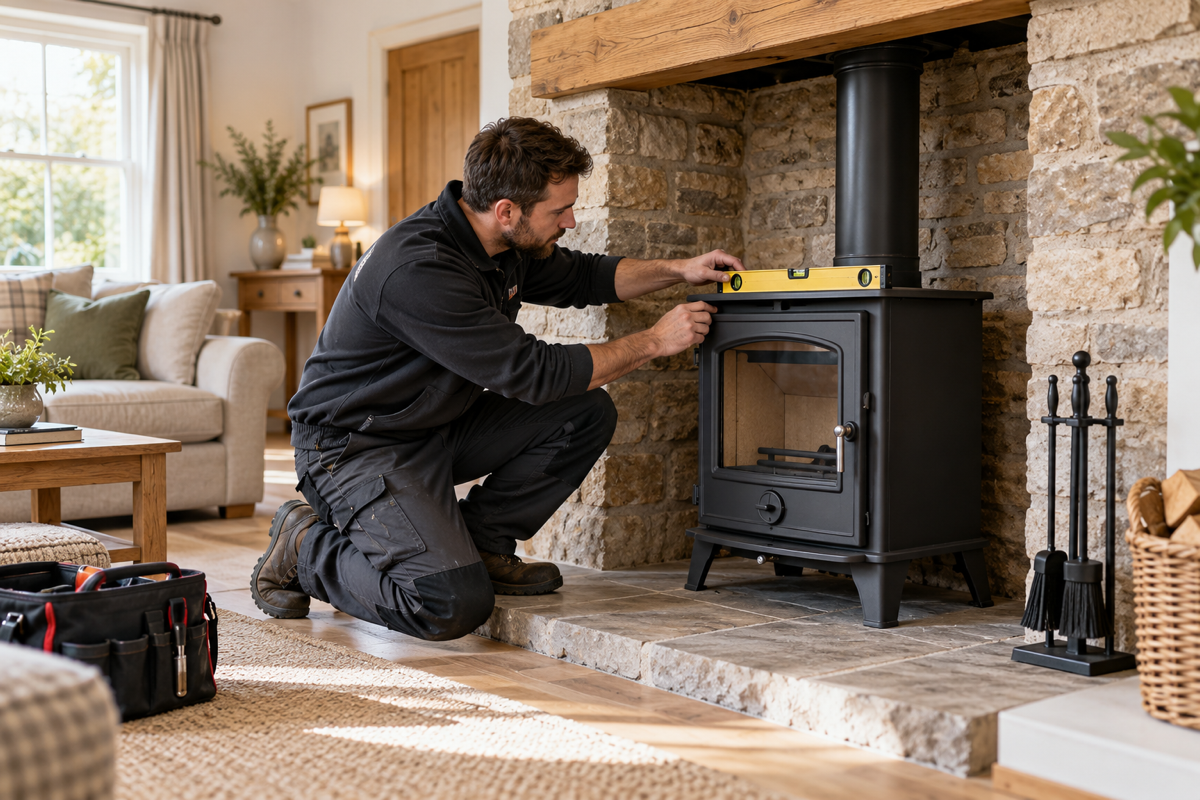
A well-installed wood-burning stove gives you a real fire that is controllable, much more efficient than an open grate and safer to live with. Getting there depends on more than choosing a stove you like the look of. The chimney or flue, the hearth, the ventilation and the size of the room all need to work together. This page explains what is involved when Northcrest Stoves installs a wood burner, and what you can expect from the first visit to the final paperwork.
Every home is different, but most installations follow the same broad stages.
We start by looking at the existing fireplace or the wall where you would like the stove. If there is a chimney, we check its general condition, its size and whether it has been used recently. We look at the hearth, the materials around the opening and the room itself. If there is no chimney, we look at possible routes for a twin-wall flue system, inside or outside the house.
Bigger is not better. A stove that is too powerful for the room will be run slowly to avoid overheating, which tends to produce more smoke, sooty glass and tar in the flue. We take into account the room size, insulation, open-plan layouts and how you plan to use the stove. Our guide on what size wood burner you need explains the basics. Stoves sold new in Great Britain since 1 January 2022 must meet Ecodesign limits on efficiency and emissions, which makes modern models considerably cleaner than many older ones.
Many existing chimneys need work before they can safely serve a stove. This might be a sweep and inspection, repairs to the chimney pot or stack, or a flexible stainless steel liner. We explain the options on our chimney lining page. Where there is no chimney, an insulated twin-wall flue is the usual answer.
The stove must sit on a suitable non-combustible hearth, with safe clearances to anything combustible such as timber beams, skirting or a mantel. Some fireplaces need opening up, a new lintel, or a hearth built or extended. See our page on fireplace and hearth preparation for more detail.
On installation day we protect your floors and furniture, fit the stove and connect it to the flue, then carry out checks to confirm the flue is sound and drawing properly. We fit a carbon monoxide alarm where one is needed, attach the notice plate that records the flue and hearth details, and show you how to light and control the stove before we leave.
Installing a wood-burning stove is notifiable building work under Part J of the Building Regulations. The relevant technical guidance is Approved Document J, which covers combustion appliances, flues, hearths and ventilation. The work must be either self-certified by an installer registered with a competent person scheme such as HETAS, or notified to Building Control before work starts so they can inspect and sign it off.
A few other points are worth knowing:
Two homes with the same stove can have very different installation costs. The main factors are:
Typical price ranges are covered in our guide to stove installation costs. These are approximate only. Every home is different, so we always provide a written quote after seeing the property.
How you run the stove matters as much as how it is installed. Burn dry, seasoned or kiln-dried logs with a moisture content of 20% or less. In England, wood sold in quantities under 2 cubic metres must be certified Ready to Burn, which makes dry logs easy to identify. Wet wood burns poorly, blackens the glass and builds up deposits in the flue. Have the chimney swept at least once a year.
Not necessarily, but the work must meet the Building Regulations. A competent person scheme installer, such as one registered with HETAS, can self-certify it. Otherwise Building Control must be notified before work starts.
Often, yes. It depends on the size of the opening, the condition of the chimney and the hearth. Some fireplaces need opening up or a new hearth. We check during the survey.
Only on a Defra-exempt stove, burning the fuels the manufacturer specifies. If you live in a smoke control area, we will help you choose a suitable exempt model.
For wood, sweeping at least once a year is the usual recommendation, and more often if the stove is used heavily. A qualified sweep can advise based on what they find.
It depends on your home, how you use the stove and what you pay for fuel. We cannot promise savings. Our guide on whether wood burners save money explains the factors.
We'll visit, check what's possible in your home and give you a clear written quotation with no obligation.
The best firewood is simply dry firewood. Here is how to spot logs under 20% moisture, what the Ready to Burn label means, how to season…
If you have a new or replacement stove fitted in England, Building Regulations say a carbon monoxide alarm should go in the same room. Here is…
Whether a wood-burning stove saves you money depends on what you pay for logs, what fuel it replaces and how you use it. This guide works…
Tell us about your property and we'll arrange a visit and a clear, written quotation.